
Embark on a journey into the world of Dividend Investing Strategies, where prudent financial decisions pave the way for lucrative returns and long-term wealth accumulation.
Delve deeper into the realm of dividend investing as we explore key concepts and strategies that can help you make informed investment choices.
Dividend Investing Strategies
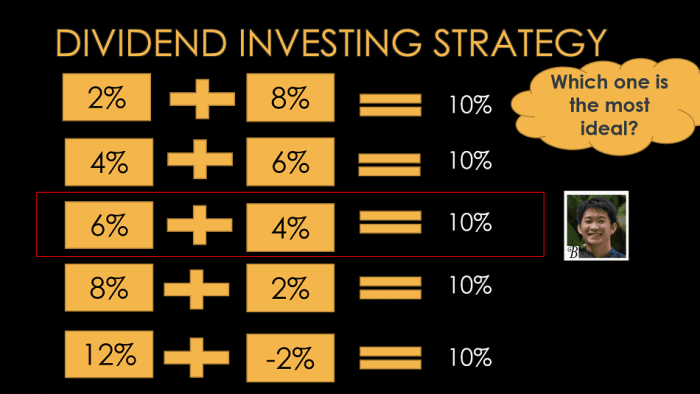
Dividend investing is a strategy where investors purchase stocks from companies that pay out dividends to their shareholders. These dividends are a portion of the company’s profits that are distributed to investors on a regular basis, typically quarterly. The goal of dividend investing is to generate a steady income stream from these dividend payments, in addition to potential capital appreciation from the stock’s price appreciation over time.
Comparison of Dividend Investing with Other Investment Strategies
- Dividend investing provides a consistent income stream compared to growth investing, which focuses on capital appreciation through investing in companies with high growth potential but lower or no dividends.
- Dividend investing is considered less risky than speculative investing, where investors take high risks for potentially high returns without the safety net of regular dividend payments.
- Dividend investing offers a hedge against market volatility compared to trading strategies that rely on short-term price movements.
Examples of Successful Dividend Investing Strategies
- Dividend Growth Investing: Investors target companies with a history of increasing dividends consistently over time, indicating strong financial health and growth prospects.
- Dividend Reinvestment Plans (DRIPs): Investors reinvest dividends back into the same stock to compound their returns over time, taking advantage of the power of compounding.
Benefits and Risks Associated with Dividend Investing
Benefits:
- Stable Income: Dividend payments provide a reliable income stream, especially for retirees or income-focused investors.
- Long-Term Growth: Dividend-paying stocks have historically outperformed non-dividend-paying stocks over the long term.
Risks:
- Market Risk: Stock prices can fluctuate, affecting the value of investments, including dividend-paying stocks.
- Dividend Cuts: Companies may reduce or eliminate dividends during economic downturns or financial difficulties, impacting investors’ income.
Dividend Stocks
When it comes to investing, dividend stocks are a popular choice among investors looking for a steady stream of income. Unlike growth stocks, which reinvest their profits back into the company for future growth, dividend stocks pay out a portion of their earnings to shareholders in the form of dividends.
Key Metrics for Evaluating Dividend Stocks
When evaluating dividend stocks, there are several key metrics to consider to ensure you are selecting reliable companies that consistently pay dividends. Some of these metrics include:
- Dividend Yield: This is the percentage of the current share price that a company pays out in dividends annually. A higher dividend yield indicates a higher return on investment.
- Payout Ratio: This ratio shows the percentage of earnings that a company pays out in dividends. A lower payout ratio is generally considered more sustainable in the long run.
- Dividend Growth History: Looking at a company’s history of dividend payments and whether they have consistently increased their dividends over time can provide insight into the company’s financial health and stability.
These metrics can help investors make informed decisions when selecting dividend-paying companies for their portfolio.
Selecting Reliable Dividend-Paying Companies
When selecting dividend-paying companies, it is essential to look beyond just the dividend yield and consider the overall financial health and stability of the company. Some tips for selecting reliable dividend-paying companies include:
- Research the company’s financials, including revenue, earnings growth, and debt levels.
- Consider the industry and market conditions that may impact the company’s ability to continue paying dividends.
- Look for companies with a history of consistent dividend payments, even during economic downturns.
By conducting thorough research and analysis, investors can identify companies with strong fundamentals and a track record of reliable dividend payments.
As we conclude our discussion on Dividend Investing Strategies, remember that a well-thought-out approach can lead to financial stability and growth, making it a smart choice for savvy investors.
Detailed FAQs
What are some common risks associated with dividend investing?
Common risks include dividend cuts, economic downturns affecting company performance, and fluctuating interest rates.
How do dividend stocks differ from growth stocks?
Dividend stocks pay a portion of the company’s earnings to shareholders in the form of dividends, while growth stocks reinvest earnings to fuel expansion.
What key metrics should one consider when evaluating dividend stocks?
Key metrics include dividend yield, payout ratio, dividend growth history, and overall financial health of the company.


